15/10/2026
My Dog Eats Too Fast: Why It Happens and Simple Solutions
You put the bowl down, you look away… and it's already empty. If your dog eats too fast, you're not alone: it's something lots of owners wonder about. Before looking for tricks, it helps to understand why they do it and to know when to ask a vet for advice. Then a few simple solutions can help them slow down.
Why do some dogs eat so fast?
Several reasons can explain why a dog wolfs down their meal:
- Competition: a puppy who grew up in a large litter, or a dog who lives with other animals, may have learned to eat fast so their share doesn't get stolen.
- Personality and appetite: some dogs are simply very food-motivated.
- A single, eagerly awaited meal: a dog who is very hungry at mealtime will tend to rush.
- Stress: a noisy or busy environment during meals can push them to hurry.
Is it serious? When to see a vet
Eating fast isn't necessarily a health problem, but it shouldn't be taken lightly. A dog who gulps everything down at once may swallow air at the same time, regurgitate or vomit right after the meal, or look uncomfortable.
Ask your vet for advice if:
- your dog has suddenly started eating much faster or begging for food far more than before;
- they're losing weight or, on the contrary, gaining weight;
- they often vomit or regurgitate after meals;
- they're drinking much more than usual.
A change in appetite can have a medical cause that only a vet can identify.
An emergency sign you should know
If, after a meal, your dog has a swollen belly, tries to vomit without bringing anything up, drools, is restless or seems very unwell, contact a vet or an emergency vet clinic immediately. These signs may point to gastric dilatation-volvulus (bloat), a life-threatening emergency described mainly in large, deep-chested dogs.
Simple solutions to help them slow down
Eat in peace
Give them their meal in a quiet spot, away from other animals and busy areas. If they no longer need to "defend" their bowl, they can relax a little.
Split the daily portion into several meals
Rather than one big meal, divide their daily portion into two or more small meals. They'll be less ravenous each time. If you change their meal routine, talk to your vet, especially for a puppy or a dog with a health issue.
The slow feeder bowl
This is a bowl with ridges, spirals or obstacles at the bottom. Your dog has to get the kibble out from between the ridges, which forces them to take their time. It's often the first solution people try, and it can be used at every meal. Choose one that suits the size of their muzzle and the size of their kibble.
Scatter the kibble
Spread the kibble on a large tray, on a clean floor or in the grass in the garden. Your dog has to find each piece with their nose. It's free and it gets their sense of smell working.
The snuffle mat
A mat made of fabric strips in which you hide the kibble. Your dog digs around with their nose to find it. Keep an eye on them at first: some dogs would rather chew the fabric than search.
Food-dispensing toys
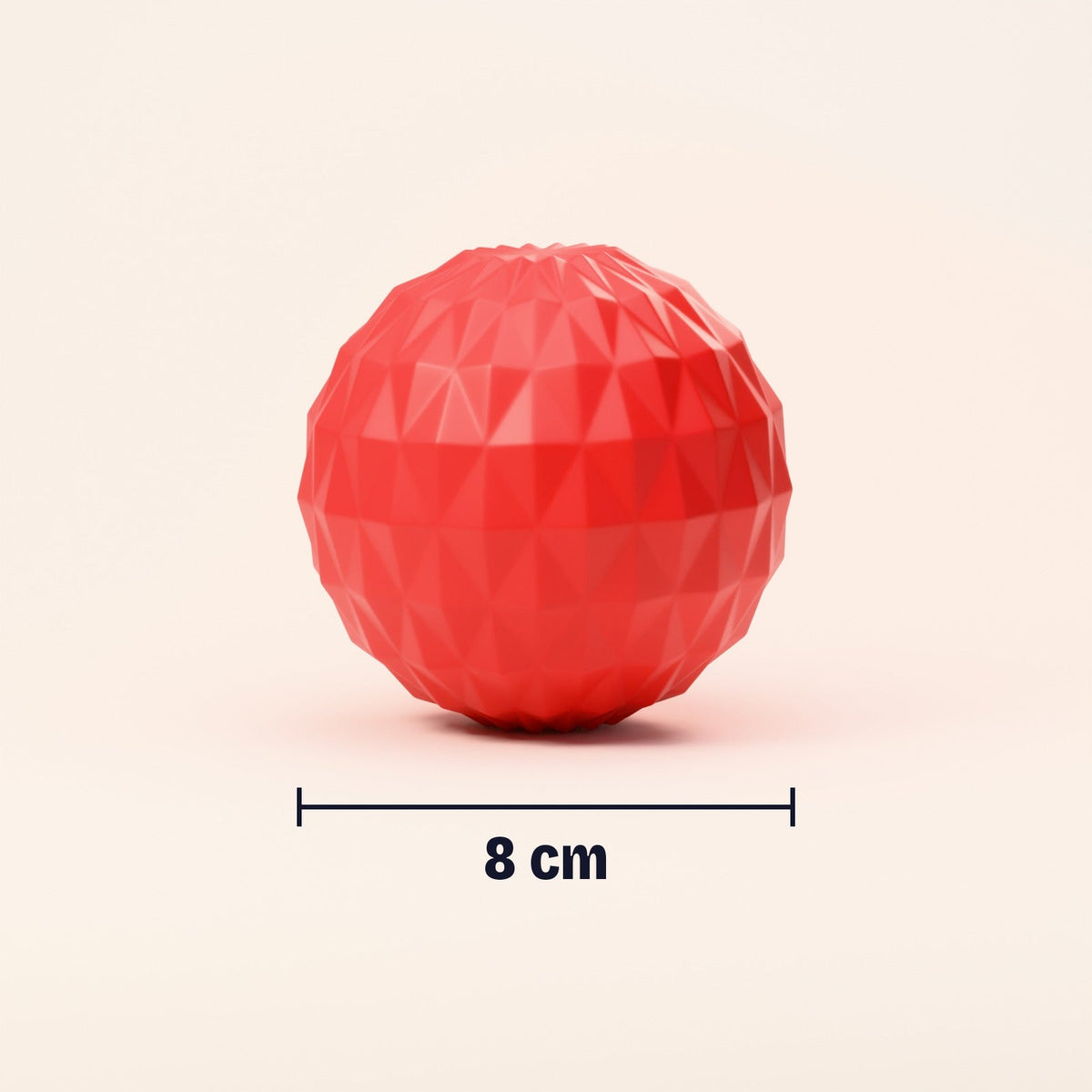
A ball or toy that releases kibble as your dog plays turns part of the meal into an activity. For a small dog, the Pattoune treat ball (8 cm, soft rubber) drops kibble one piece at a time when they push it. It's made for cats and small dogs: for a medium or large dog, choose a bigger toy that they can't swallow.
As with any new toy, stay next to them the first few times and remove it if they chew it or if it gets damaged. To get off to a good start, take a look at our treat ball guide.
How to combine these solutions
No need to do everything at once. A simple approach:
- Main meal in a calm spot, in a slow feeder bowl.
- A small part of the daily portion set aside for a game: snuffle mat, scattered kibble or a kibble dispenser ball.
- Observation: if they regurgitate less and seem more relaxed, that's a good sign. If not, talk to your vet.
Always remember to take the kibble for games from their daily portion, so you don't overfeed them.
These activities have another advantage: they keep your dog busy. If your dog stays home alone while you work, also read how to keep your dog busy home alone.
Frequently asked questions
Is a slow feeder bowl enough?
For many dogs, it already helps them slow down. Some still end up emptying it very quickly: you can then switch things up with a snuffle mat or a food-dispensing toy. And if the problem continues, ask your vet for advice.
My puppy eats too fast. Is that normal?
Lots of puppies eat enthusiastically, especially if they grew up in a litter. Give them their meal in a calm place, with no other animals around. If you notice vomiting, a swollen belly or growth that worries you, see your vet.
Can I give the whole meal in a dispenser ball?
It's possible for a small dog who has really understood how it works, but it can become long and frustrating. The simplest option is often to put part of the portion in the ball and serve the rest in their bowl.